Knitting Techniques Explored: Pairing Increases and Decreases
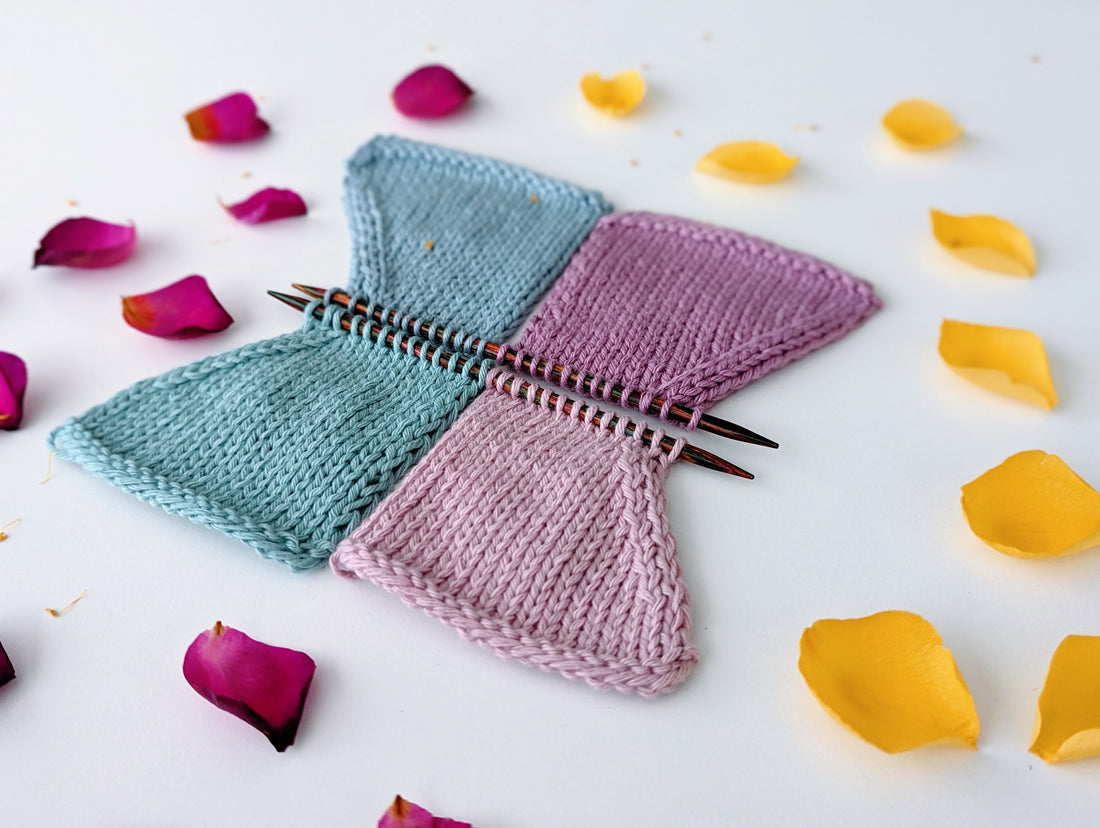
In my years of working with various textiles, I have found that the structure of a knitted fabric is defined by how we manipulate the direction of our stitches. Building on our previous discussion in The Ins and Outs of Knitting & Crochet: Increases and Decreases, I want to look closely at commonly used increases and decreases. Specifically, we will look at how pairing them creates balanced, structural symmetry in your work.
Knitted increases and decreases lean either to the left or the right, depending on how they are constructed. By mirroring these directional leans on either side of a garment or within a pattern repeat, we achieve clean lines and structural integrity. This is especially true when working with plant-based fibres like organic cotton or linen, which do not have the natural elasticity of animal fibres. Every stitch stands out clearly, meaning precise paired shaping is key to a polished finish.
Why Paired Stitches Matter
When we shape a piece of knitwear, we are changing its physical geometry. Pairing your increases and decreases matters for several reasons:
- Symmetry: The primary reason for pairing is to create a clean mirror image. For example, when shaping a raglan sleeve or a V-neckline, you need the stitches on the left and right edges to lean in opposite directions. Using the same stitch on both sides makes one edge look clean while the other looks disrupted.
- Fabric Drape and Tension: Different techniques pull the surrounding loops in different ways. Pairing the right stitches helps distribute tension evenly across the row, preventing the fabric from skewing or bias-pulling. This is particularly noticeable in openwork patterns, which you can read more about in Lace Knitting Basics: A Guide to Yarn Overs and Leaning Decreases.
- Pattern Integrity: In lace, cables, or decorative panels, the direction of your increases and decreases defines the flow of the design. A misplaced lean breaks the visual path of the motif.
- Calculated Shaping: If you are drafting custom designs, calculating your repeats carefully is essential. For automating these calculations and planning your next project, you can use purlJam - Your New Creative Partner to generate accurate layouts.
A Guide to Paired Increases and Decreases
The table below shows how the most common increases and decreases behave on the right side of your work, assuming purl stitches are worked on the wrong side. Before jumping into complex shaping, it is always helpful to be confident with the basics, which I outline in Knit and Purl: The Foundations of Knitting.
| Technique | Type | Direction | Best Paired With |
|---|---|---|---|
| KFB (Knit Front and Back) | Increase | Neutral | - |
| M1L (Make One Left) | Increase | Left | M1R (Make One Right) |
| M1R (Make One Right) | Increase | Right | M1L (Make One Left) |
| LLI (Lifted Left Increase) | Increase | Left | LRI (Lifted Right Increase) |
| LRI (Lifted Right Increase) | Increase | Right | LLI (Lifted Left Increase) |
| YO (Yarn Over) | Increase | Neutral | - |
| K2tog (Knit Two Together) | Decrease | Right | SSK (Slip, Slip, Knit) |
| SSK (Slip, Slip, Knit) | Decrease | Left | K2tog (Knit Two Together) |
| P2tog (Purl Two Together) | Decrease | Right | SSP (Slip, Slip, Purl) |
| SSP (Slip, Slip, Purl) | Decrease | Left | P2tog (Purl Two Together) |
| PSSO (Pass Slipped Stitch Over) | Decrease | Left | - |
| CDD (Centered Double Decrease) | Decrease | Central | - |
Selecting the right increase or decrease depends on your project goals and the specific fibre you are using. For instance, lifted increases (LLI and LRI) are exceptionally discreet because they pull yarn from the row below rather than creating a new bar, making them excellent for smooth cotton jersey. Feel free to substitute these stitches in a pattern if you prefer their texture, but keep in mind that changing the direction or bulk of a decrease will alter the drape of the finished fabric. Take your time, work the stitches deliberately, and rely on blocking to settle the tension of your paired stitches.
Frequently Asked Questions
Why does my SSK look looser than my K2tog?
The SSK decrease naturally uses slightly more yarn because slipping the stitches stretches the loops. To tighten your SSK, slip the stitches knitwise, return them to the left needle, and work the stitch through the back loops using the tips of your needles to avoid stretching the fabric.
Can I substitute KFB for M1L or M1R?
While you can substitute them, KFB creates a small, visible purl bump on the fabric surface, whereas M1L and M1R are nearly invisible. If you want a smooth, clean stockinette fabric, it is best to use M1L and M1R instead of KFB.
How do plant-based fibres affect paired decreases?
Plant fibres like organic cotton, linen, and bamboo do not shrink or bloom during washing in the same way animal fibres do. Because they have less elasticity, any unevenness in your paired decreases will remain visible, making clean, symmetrical execution and careful blocking highly important.